UNNN Logo

United
Non-Nuclear
Nations

The Case for the UNNN

UN Ideals, UN Failures

The United Nations was formed after World War II to create a more effective international body than the League of Nations. Its founding principles include:

  • Maintaining international peace and security
  • Developing friendly relations among nations
  • Achieving cooperation in solving economic, social, cultural, and humanitarian problems
  • Promoting respect for human rights and fundamental freedoms
  • Serving as a center for harmonizing the actions of nations

The UNNN embraces these principles. But despite them, the UN has failed to prevent domination by nuclear-armed states, especially on the Security Council, where veto power has been used to block action against genocide and disarmament alike.

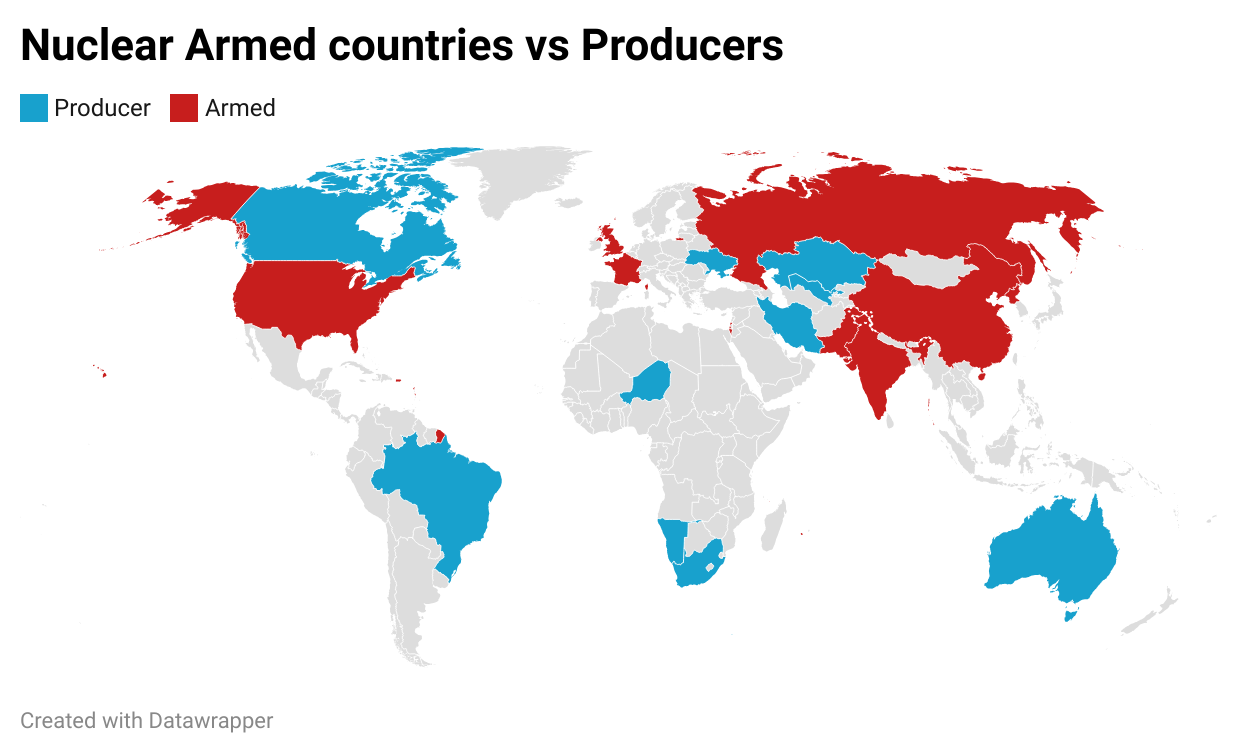
Map of Nuclear Armed and Uranium Producer Countries

The Failure of the Nuclear Non-Proliferation Treaty (NPT)

The NPT came into force in 1970. In over 50 years, only South Africa has dismantled its nuclear arsenal. Former Soviet republics returned their weapons to Russia, but the major nuclear powers—especially the US, Russia, and China—are actively modernizing or expanding their stockpiles, in violation of the NPT’s disarmament goals.

At the same time, these nations demand that non-nuclear states maintain their restraint. The UN General Assembly routinely passes resolutions calling for disarmament—but they are non-binding, and nuclear powers vote against them. Disarmament negotiations have stalled for decades.

Timeline: Failure of Disarmament

1968
NPT signed – goal: prevent spread and encourage disarmament.

1970
NPT enters into force. Nuclear states commit to disarm "eventually".
1995
NPT extended indefinitely — no deadline for disarmament.
2017
TPNW passed — all nuclear nations boycott it.
2022
Russia openly threatens nuclear use in Ukraine invasion.
2025
No nuclear power has disarmed. UN remains powerless.

Nuclear States Dominate the Security Council

Structural Challenges:

  • Veto Power as Protection: Each P5 member can block any action that challenges their nuclear status.
  • Status Reinforcement: Permanent Security Council seats give nuclear states prestige and influence.
  • Legitimacy Paradox: The UN’s peacekeeping body is run by nations reliant on weapons of mass destruction.
  • Unified Resistance: The P5, despite conflicts, often oppose ambitious disarmament efforts together.

Practical Effects:

  • Limited UN Progress: Effective enforcement of disarmament is impossible through the Security Council.
  • Forum Shopping: Non-nuclear states now seek progress through new treaties like the TPNW.
  • Bifurcated Governance: The General Assembly debates disarmament, but the Security Council enforces only non-proliferation.
  • Selective Enforcement: Nuclear states punish proliferation but ignore their own disarmament obligations.

Inverting Control, Regaining Democracy

Disarmament cannot proceed while nuclear powers enjoy structural dominance. Their vetoes have blocked justice, enabled war crimes, and silenced the will of the majority. This contradicts the very foundation of the UN.

The UNNN proposes a reversal. We offer a fully democratic body, open only to non-nuclear nations. No vetoes. No exceptions. Only equal voices committed to peace.

Nuclear-armed states can join—if they dismantle their arsenals and accept inspections. Until then, the UNNN gives non-nuclear countries a collective platform to act with unity, apply pressure, and shift global norms through example, policy, and trade.

We demand accountability, support the International Criminal Court, and place human rights at the center of our agenda.